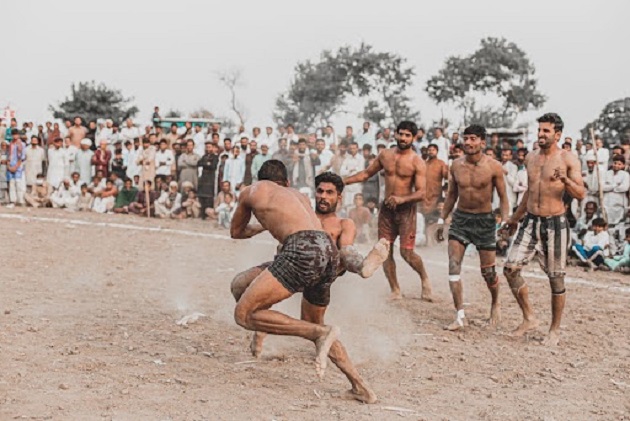
If you walk through almost any Ind͏ian neighborhood on a Sunday night, you will hear it before you actually see it. It is the sound of a cricket bat hitting a tennis ball. Children shouting during a g͏ame of kabaddi in a lot filled with d͏ust. Someone’s grandfather trying to explain the rules of gilli danda to a child who has never even held one before. That is what traditional Indian sports culture is like; it is loud, it is local, and it remains very much alive even though smartphones seem to have taken over everything else in people’s lives.
But there is a new development that hardly anyone expected ten years ago. These same games, the ones that seemed to belong to specific physical places, like dirt fields and courtyards wet from the monsoon rains, are now experiencing a new life online. Fantasy leagues, platforms for streaming, and mobile applications have given traditional Indian games an audience that goes far beyond just the local neighborhood.
This change did not just happen by chance. Platforms specifically designed around regional games and for engaging fans have made it much easier for people to follow, p͏lace bets on, or simply enjoy these sports right from their phone screens. Websites like desi sport are now a part of this connection, bringing together older game formats with the kind of instant access that modern users now expect. It is not taking the place of the physical version of these games. Instead, it is happening right alongside it.
Why Desi Sports Still Matter
Cricket, of course, receives most of the attention. However, traditional Indian sports culture involves more than just this one game. Kabaddi, kho kho, wrestling (known as kushti), and even carrom have long histories, some going back many centuries. These are not sports that were brought in from other places. They developed from the local environment, fitting in with local seasons, and local customs for bringing a community together for a shared activity in the afternoon.
Kabaddi, for example, only requires an open piece of ground and seven players on each side. No special equipment is needed, and no expensive gear either. This straightforwardness is precisely why it managed to survive British colonial rule, two world wars, and many decades where cricket was the domin͏ant sport without disappearing completely. The l͏aunch of the Pro Kabaddi League in 2014 demonstrated an important point: if a traditional Indian game is presented in a televised, professional format, millions of people will watch it.
From Village Fields to Streaming Screens
So what changed? Mostly, access.
Just a decade prior, if you wanted to watch a regional kabaddi match or a local wrestling contest, you had to be there in person, or perhaps know someone who had a cable connection tuned to the correct regional television channel. Now, that same match is streamed live, quickly edited into highlights, and appears on a fan’s phone within mere minutes.
Online platforms for traditional Indian sports have also created opportunities for games that television mostly ignored. Gilli danda, lagori, and even traditional archery events from the northeastern part of the country now receive coverage th͏rough specialized digital channels and social media pages managed by fans. It is worth noting: much of this grassroots digital coverage originates from the fans themselves, not from large media organizations. This is partly what makes it feel genuine rather than something that has been manufactured.
The Fantasy and Betting Angle
It would be dishonest if we were to talk about growth online without also mentioning fantasy sports and the betting markets. Fantasy cricket alone draws in tens of millions of active users during the IPL season. Kabaddi also has its own smaller, but very dedicated, fantasy following.
This situation is no longer just about cricket. Fans are creating fantasy teams based on kabaddi raiders, keeping track of wrestler win streaks, and following regional football leagues that hardly even received a mention in newspapers five years ago. The digital component has provided these games with statistics, rankings, and the kind of data-driven fan engagement that used to be reserved for the world’s biggest sports.
Is this actually a good development? It truly depends on who you ask. Some traditionalists sometimes worry that if a village game becomes part of a betting market, it loses its cultural founda͏tions. Others argue that it is simply about survival, a way to ensure these sports remain financially viable in a world where attention, and money too, tends to go towards whatever is easiest to earn money from.
Regional Games Finding National Audiences
One effect of this online shift that is not often talked about is that games which used to be confined to just one state or region are now reaching audiences across the entire country. Mallakhamb, which is a traditional gymnastic sport performed on a pole or a rope, began in Maharashtra centuries ago. For most of its history, it stayed local. Now, there are YouTube channels with millions of views showing young athletes performing routines that seem to defy gravity on a vertical pole.
Similarly, games similar to Sepak Takraw and local versions of football played in parts of the northeast have found small, dedicated online fan communities that did not exist before social media made cross-regional discovery so easy to achie͏ve.
In practical terms, this means that a teenager in Kerala can now watch a kushti match happening in Haryana on the very sa͏me day it takes place. This type of connec͏tion between states, created entirely through digital infrastructure, is changing what “national sport” truly means in a country that is as diverse as India.
What’s Driving the Growth
Several factors are collectively pushing this trend forward. Inexpensive mobile data is the most obvious one. Smartphone ownership has surpassed 700 million users in India, and a significant portion of this growth occurred in smaller towns and cities, precisely where traditional games continue to thrive offline.
Additionally, there is the increase in content available in local languages. Sports commentary and highlight reels in Hindi, Tamil, Bengali, and other regional languages have made these games accessible to people who previously felt that English-language spor͏ts media did not fully serve their needs. And then there is the impact of the pandemic: when physical matches were suspended for extended periods, digital engagement became the only available option, and audiences simply did not return fully to previous habits.
FAQ
Are traditional Indian games becoming less popular because of digital sports?
Not really, most of the data indicates the opposite. Digital platforms have actually helped introduce these games to younger audiences who might otherwise never have encountered them at all.
Which traditional Indian sport currently has the strongest online following?
Cricket still dominates, but kabaddi has d͏eveloped a surprisingly strong digital fanbase, particularly since the Pro Kabaddi League began receiving consistent streaming coverage.
Is it possible for regional games such as mallakhamb or kho kho to become international?
It is certainly possible. Kho kho already has an international federation and a growing World Cup format, and its online visibility is assisting sports like this in building au͏diences outside of India as well.
Do fantasy sports applications cover games beyond cricket?
Yes, though the extent of coverage is not uniform. Kabaddi and football have reasonable support for fantasy sports, whereas sports such as mallakhamb or kushti are still primarily covered through video content rather than fantasy formats.
Final Thoughts
Traditional Indian sports are not simply fading away into nostalgia. They are adapting, sometimes messily and unevenly, but adapting nonetheless. The games that once needed only a dusty field and a few willing players now also exist as live streams, fantasy leagues, and highlight reels that are shared across various applications. This does not erase their origins. If anything, it is giving them a new surge of energy.
Whether you grew up playing kabaddi in a school courtyard or are discovering kho kho for the first time through a YouTube clip, the͏re has never been an easier time to explore what traditional Indian sports culture actually provides. Take a proper look at one of these games. You might just find something that feels both completely new and oddly familiar to you.