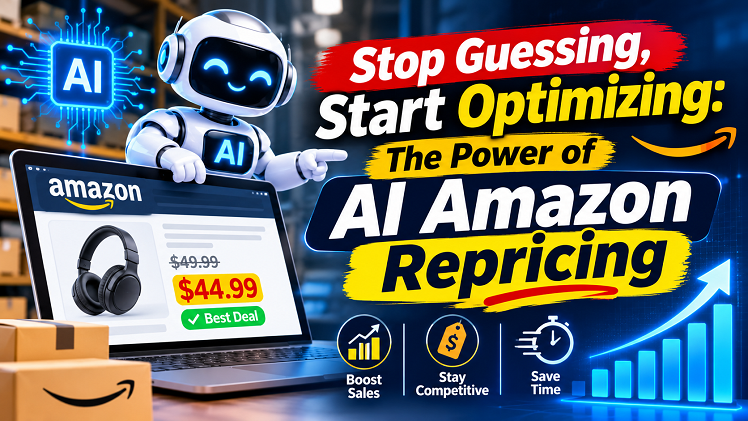
Selling products on Amazon requires more than offering quality products and maintaining attractive listings. Customers’ decision to pick one supplier over another is mostly influenced by pricing. With competitors constantly adjusting their prices, relying on manual calculations and occasional price updates can make it difficult to stay competitive. Artificial intelligence is changing this process by helping sellers make informed pricing decisions based on market conditions, competition, and profitability.
Why Traditional Pricing Strategies Are No Longer Enough
Many Amazon sellers initially manage product prices manually. They monitor competitor listings, compare similar products, and adjust their prices whenever necessary. While this approach may work for smaller inventories, it becomes increasingly challenging as businesses expand.
Competitor prices can change frequently, making yesterday’s pricing decisions less effective today. Sellers who depend entirely on manual adjustments may miss opportunities to attract customers or unknowingly reduce their profit margins.
An AI Amazon repricer helps address these challenges by analyzing relevant pricing information and recommending or making adjustments according to predefined business objectives. This allows sellers to approach pricing more strategically rather than relying on assumptions.
The Intelligence Behind Automated Repricing
Artificial intelligence introduces a more analytical approach to ecommerce pricing. Instead of simply matching the lowest competitor price, advanced repricing systems can evaluate multiple factors before determining an appropriate selling price.
These factors may include competitor activity, product demand, inventory availability, marketplace fees, and desired profit margins. By processing this information, intelligent systems can identify pricing opportunities that might otherwise go unnoticed.
For example, when competing sellers increase their prices, an automated system may identify an opportunity to raise prices without unnecessarily sacrificing competitiveness. Similarly, when competition intensifies, it can suggest adjustments that remain within acceptable profitability limits.
The effectiveness of these decisions depends on the system’s capabilities, available data, and pricing rules established by the seller.
Protecting Profit Margins While Remaining Competitive
One common misconception about automated repricing is that it focuses exclusively on offering the lowest possible price. However, constantly undercutting competitors can reduce profitability and create unnecessary pricing battles.
Effective repricing should balance competitiveness with financial sustainability. With Amazon auto pricing, sellers can establish minimum and maximum pricing boundaries to help prevent excessive discounts or unrealistic price increases. These limits are particularly important when accounting for product acquisition costs, shipping expenses, referral fees, and other operational charges.
A thoughtful pricing strategy considers the actual profit generated from each transaction rather than focusing solely on sales volume. This approach helps businesses maintain healthier margins while competing in a crowded marketplace.
Reducing Time Spent on Repetitive Pricing Tasks
Managing hundreds of product listings requires considerable attention. Sellers must track competitor movements, update prices, monitor inventory, and evaluate sales performance.
Automated repricing reduces the need for constant manual intervention by executing established pricing rules. This gives business owners more time to focus on customer service, product sourcing, marketing, and business development.
Automation can also improve consistency. Instead of making occasional adjustments based on limited observations, sellers can apply clearly defined pricing strategies across selected products.
However, regular monitoring remains important to ensure automated decisions continue supporting business goals.
Making Pricing Decisions Based on Product Performance
Not every product requires the same pricing strategy. Popular products with strong demand may benefit from different pricing approaches than slow-moving inventory.
An intelligent pricing system can help sellers evaluate these differences and identify where adjustments may be useful.
For products experiencing consistent demand, maintaining profitable prices may be more valuable than aggressively matching competitors. Meanwhile, slower-selling products may require carefully planned price reductions to encourage purchases and improve inventory movement.
An AI Amazon repricer can support this process through pricing recommendations informed by product performance and business costs. Sellers should still review recommendations against their overall financial objectives.
Building a Sustainable Pricing Strategy for the Future
Successful Amazon pricing requires continuous evaluation rather than occasional adjustments. Competitor behavior, operational expenses, customer demand, and inventory conditions can all influence the effectiveness of existing pricing rules.
Businesses adopting automated solutions should begin with clear profitability targets, accurate cost information, and appropriate pricing limits. Reviewing performance regularly helps identify opportunities for improvement while reducing unnecessary financial risks.
It is also important to distinguish genuine AI capabilities from conventional rule-based automation. Both approaches can be useful, but sellers should understand exactly how their chosen software makes pricing decisions.
Conclusion
Pricing should never depend entirely on guesswork, especially in a competitive marketplace where small decisions can influence profitability. Intelligent repricing offers Amazon sellers an opportunity to make more consistent, informed, and efficient pricing decisions.
By combining automation with thoughtful financial planning, sellers can protect profit margins, respond to market changes, and develop a stronger foundation for sustainable ecommerce growth. The ultimate objective is not simply to offer the lowest price, but to identify prices that support both customer demand and long-term business success.